One of the best ways to nourish your body and your brain is to eat fresh eggs from pasture raised hens. Eggs are known as “the brain food” in some cultures and are considered to be the “most complete” protein source in a single food.
Animal protein is the only source of complete protein and is essential for normal growth, hormonal development, healthy brain and nervous system functions, blood clotting, and milk production for nursing moms. Notably, eggs, meat (including fish), and milk – the animal protein trio – provide vital fat-soluble nutrients and each source is important for the development of your body and mind. They contain fats and protein which allows for the protein to be utilized sufficiently in the body. Many problems are known to arise from an imbalanced high-protein, low-fat diet because of the lack of fat-soluble vitamins. One such issue that can arise is the rapid growth and rapid depletion of one’s vitamin A and vitamin D reserves.
“Our endorsement of animal products must be tempered with this important caveat: The meat, milk, and eggs in our supermarkets are highly contaminated and vastly inferior in nutritional quality to those available to our ancestors just a few decades ago… Chickens are raised in crowded pens, often under artificial light both night and day, and fed on substandard food…According to the renowned cancer specialist Virginia Livingston-Wheeler, most chicken and nearly half the beef consumed in America today is cancerous and pathogenic.”
-Nourishing Traditions, p. 31
Eggs from commercially raised, mass produced, hormone and antibiotic injected caged hens are no match for eggs from free-roaming, scavenging, omnivorous hens. The quality, taste, color, and nutritional value of eggs from pastured hens is superior. Why?
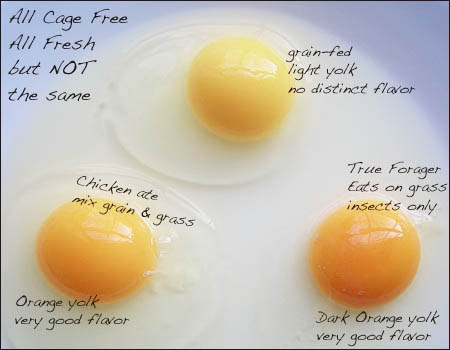
Chickens are not vegetarians. They eat bugs, worms, and meat in addition to leaves, herbs, and grasses. When chickens are restricted in their diet, they are malnourished and therefore the eggs they produce are malnourished as well. Caged chickens do not get adequate amounts sunshine which lowers their egg production and lowers the nutritional value. Free-roaming chickens produce eggs that are packed full of vitamins and minerals including, balanced and beneficial amounts of omega-3 and omega-6 fatty acids, vitamin A, vitamins B6 and B12, vitamin D, vitamin E, vitamin K, Sulphur, and folic acid. Eggs from such hens will have a vibrant yellow to yellow-orange yolk color. This is an indicator that the eggs are rich in carotenes. The deeper orange the yolks are, the higher levels of fat-soluble vitamins are available.
What about my cholesterol?
Propaganda has led to the fear of eggs because of high levels of cholesterol. The longstanding reality is that eating properly sourced eggs is one of the best ways to maintain healthy cholesterol levels. Research and experiments have repeatedly proven that eating eggs has no detrimental effect on blood cholesterol levels. Cholesterol, provided in egg yolks, is needed for the optimal development of the nervous system for people of all ages. Additionally, for infants, egg yolks are highly recommended as a first food. The yolk contains the beneficial fatty acids needed for baby’s brain, nervous system, and visual development. Feeding infants egg yolks is known to prevent learning disabilities and defects in visual functions.
In order to receive the benefits of eggs, they must be properly sourced. Which method produces the most nutritious and delicious egg?
- Conventional
- These crowded and caged chickens produce low-nutrient, malnourished eggs due to the fact that they receive artificial light and have little to no room to move about. Additionally, they are subjected to antibiotics and hormones to boost egg production. Conventional eggs are produced for quantity and profit, rather than for quality and nourishment.
- Cage-Free
- These chickens have a slightly better set up than conventionally raised chickens. Cage-Free simply means they are not kept in cages. However, they are raised in crowded houses with little room to move about. Additionally, they have very little access to fresh air and are raised under artificial light. The eggs produced by cage-free chickens are a very small step above the eggs produced by conventionally raised chickens.
- Free Range
- These chickens are not really free as one would assume from the label. What makes these chickens “free” is that they have a door, or a ramp, that allows them access to a small outdoor area. These chickens, and their eggs, are not much different than the chickens and eggs of the cage-free method. To be labeled “free-range”, the chickens must have a way to go outside…but there are still thousands of chickens confined together.
- Vegetarian
- These chickens are on a strict vegetarian diet that includes corn, soybean, and grain products. The downfall with this method is that chickens are omnivores. The chickens and the eggs are malnourished.
- Organic
- These chickens are fed food that is free of pesticides, antibiotics, hormones, and other chemicals. While this may sound promising, they still may not have access to sunlight, bugs, and space as they would if they were pastured. If you cannot get pastured eggs, organic eggs are the next best option.
- Pastured
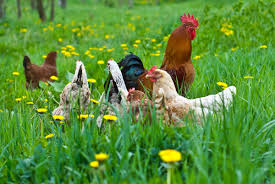
- These chickens have ample space to roam about in the pasture and receive sunlight and fresh air daily. They freely graze organic grasses and snack on bugs and worms. Eggs produced by these chickens are loaded with nutrients! Pastured chickens produce a superior egg in both nutrient density and flavor.
Next Steps
Find a local farmer in your area that raises organic, pastured hens. If you can, find a farmer that has eggs from organic, pastured, and corn and soy free chickens. That is optimal. Be sure to ask questions about how the chickens are raised too.
Get crackin’! Eggs are a very versatile food. From simple scrambled, fried, or boiled eggs to quiches, custards, and ice cream, there’s a world of possibilities.
If you don’t like eggs, eat butterfat so that you can easily and enjoyably absorb vitamin A and other important nutrients.
Not sure where to start? I’m here to help! Contact me.
 Mama Lamb